Orlando is the theme park capital of the world, drawing over 75 million visitors annually. For real estate investors, the math seems simple: buy a house, list it on Airbnb, and watch the bookings roll in. However, the reality of Orlando vacation rental investing is far more complex.
Many new investors jump in without understanding the unique ecosystem of Central Florida. They assume general real estate rules apply, only to find themselves facing zoning violations, unexpected seasonality gaps, or restrictive HOAs.
Read on to learn the top Orlando STR investment mistakes made during the critical first two years.
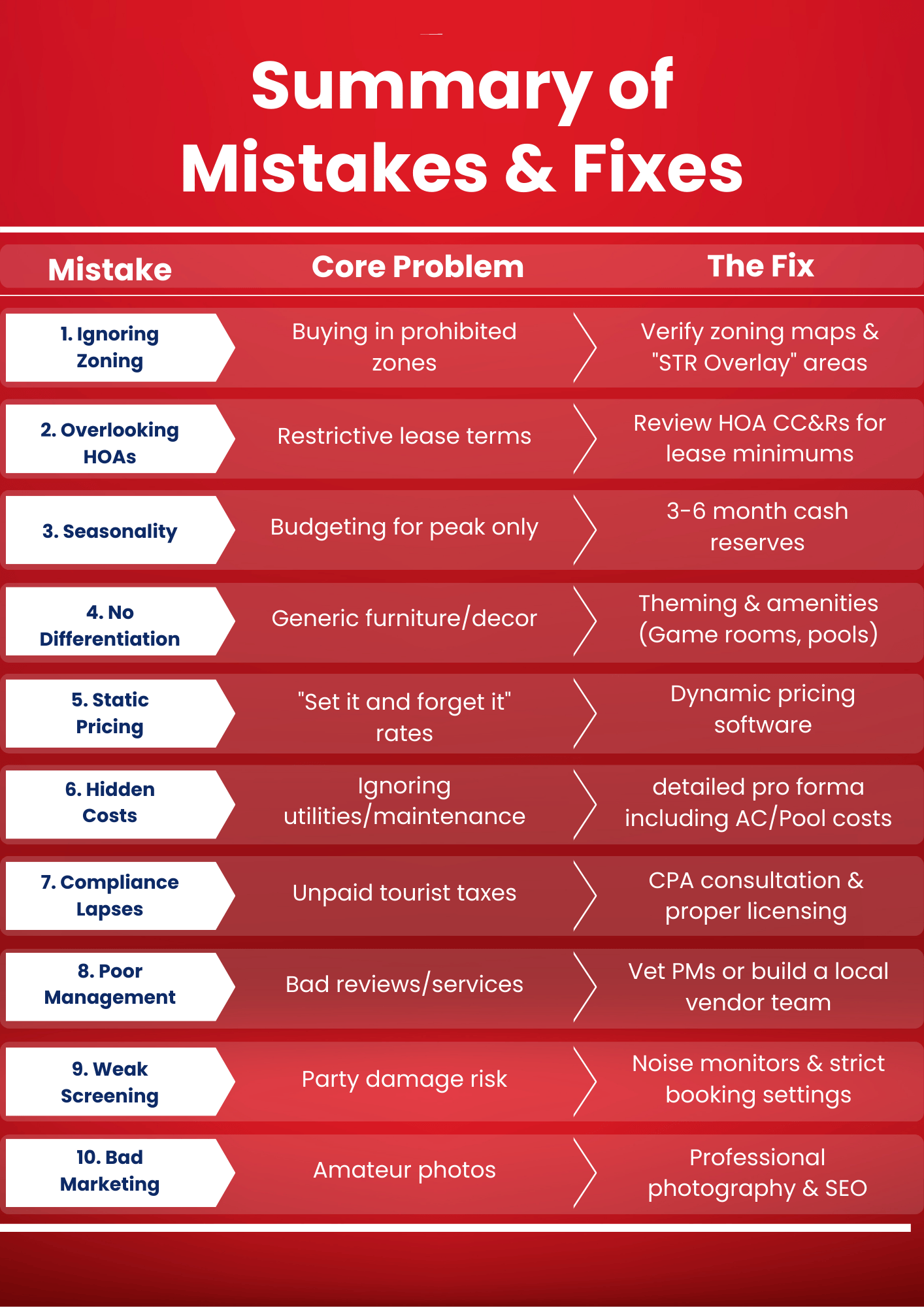
1. Ignoring Orlando’s Complex Zoning Laws
The Problem: Assuming you can operate a short-term rental (STR) in any residential neighborhood.
Local Impact: The City of Orlando and the surrounding counties have distinctly different rules. For instance, in strict residential zones within city limits, whole-home rentals are often prohibited. You might be required to live on-site to rent out a room. Conversely, unincorporated areas in Osceola County (like Kissimmee) or Polk County (Davenport) have specific zones dedicated to STRs.
Consequence: If you buy a property in a zone that prohibits STRs, you face a complete business shutdown. Code enforcement in Orlando is active, and violations can lead to liens on your property. This is one of the most fatal mistakes new Airbnb hosts make in Orlando.
The Fix: Never assume zoning based on a neighbor’s listing. Verify the specific zoning of the address using county property appraiser sites or consulting with a specialized realtor. Focus your search on “short-term rental overlay” zones.
2. Overlooking HOA Restrictions
The Problem: Buying a property in a Homeowners Association (HOA) without thoroughly vetting their rental restrictions.
Local Impact: Do HOAs allow short-term rentals in Orlando? It depends entirely on the community. Many residential communities near Disney were built for long-term residents and have covenants requiring minimum lease terms of 7 to 12 months. Even some “resort” communities have strict rules regarding guest registration and gate access that can throttle your operations.
Consequence: You may close on a house only to receive a cease-and-desist letter from the HOA management company. You are then forced to pivot to long-term leasing, which typically offers a lower ROI compared to STRs.
The Fix: Review the HOA’s Declaration of Covenants, Conditions, and Restrictions (CC&Rs) specifically for leasing clauses. Look for “minimum lease duration” language.
3. Underestimating Seasonality and Revenue Volatility
The Problem: projecting annual income based on peak season numbers (March, July, December).
Local Impact: Orlando is a seasonal market. While Spring Break and Christmas are booming, September and May can see occupancy dip significantly. Airbnb occupancy Orlando data shows that revenue is not a flat line; it is a rollercoaster.
Consequence: Investors who don’t budget for the low months often run into cash flow issues. They may struggle to cover the mortgage and utilities in September, leading to financial stress or forced sales. Why do Orlando STRs fail after the first year? Often because they run out of cash during the slow season.
The Fix: Build a cash reserve covering 3-6 months of expenses. Underwrite your deal using conservative annual averages, not best-case scenarios.
4. Failing to Differentiate in a Saturation Market
The Problem: Listing a generic home with standard furniture and expecting high occupancy.
Local Impact: Is Orlando oversaturated with Airbnbs? With thousands of active listings, the answer is yes for average homes. However, there is a shortage of exceptional homes. In a market driven by families visiting Disney and Universal, a beige bedroom cannot compete with a fully immersive Harry Potter or Star Wars-themed room.
Consequence: You are forced to compete on price alone. This “race to the bottom” erodes your margins and attracts lower-quality guests who are bargain-hunting.
The Fix: Invest in professional interior design and theming. A game room, a themed bunk room, or a private pool are no longer luxuries; they are necessities for high-performing Orlando short-term rental investing.
5. Using Static Pricing Strategies
The Problem: Setting a flat nightly rate or only manually adjusting it on weekends.
Local Impact: Orlando’s demand is driven by events: conventions at the Orange County Convention Center, marathons, festivals, and holidays. Airbnb’s pricing strategy in Orlando requires agility. A static price will either be too low during high-demand events (leaving money on the table) or too high during low-demand weeks (leaving the calendar empty).
Consequence: You miss out on the “surge” revenue that makes STRs profitable. Over a year, this inefficiency can cost you 10-20% of your gross revenue.
The Fix: Use dynamic pricing software (like PriceLabs or Wheelhouse) that adjusts your rates daily based on local supply and demand data.
6. Underestimating Operational and Hidden Costs
The Problem: Focusing only on the mortgage and forgetting the heavy operational expenses of a hospitality business.
Local Impact: In Central Florida, pool heat is a major expense in winter, and air conditioning is a massive expense in summer. Lawn care, pool maintenance, pest control, and high-speed internet are mandatory recurring costs.
Consequence: How long does it take for an Orlando Airbnb to be profitable? If you miss these costs, the answer might be “never.” Investors often find their net income is thousands of dollars lower than projected because they forgot to account for $400/month electric bills in July.
The Fix: Create a detailed pro forma that includes all utilities, subscriptions, and a maintenance buffer of at least 5% of revenue.
7. Neglecting Regulatory Compliance and Taxes
The Problem: Assuming Airbnb or Vrbo collects and remits all necessary taxes for you.
Local Impact: Florida has a State Sales Tax, and counties like Orange and Osceola have a Tourist Development Tax (TDT). While platforms collect some of these, there are nuances. Furthermore, Orlando Airbnb regulations require business licenses and tax receipts that must be renewed annually.
Consequence: The counties audit STR owners. Failure to pay TDT can result in back taxes, interest, and penalties that wipe out your profits.
The Fix: Consult with a local CPA who specializes in STRs to ensure you are registered with the Tax Collector and understand your remittance obligations.
8. Choosing the Wrong Management Strategy
The Problem: Hiring the cheapest property manager or attempting to self-manage from out of state without systems.
Local Impact: Should I self-manage my Orlando Airbnb? You can, but Orlando guests are high-maintenance. They expect resort-quality cleanliness and immediate responses. A “discount” property manager often cuts corners on cleaning or maintenance to stay profitable.
Consequence: Bad reviews. In the algorithm-driven world of Airbnb, a drop from 4.8 to 4.5 stars can devastate your visibility and booking rate.
The Fix: If you hire a manager, interview them on their ratios (properties per staff member). If you self-manage, build a “boots on the ground” team of reliable cleaners and handymen before you list.
9. Inadequate Guest Screening
The Problem: Turning on “Instant Book” with no requirements to maximize occupancy.
Local Impact: While Orlando is family-oriented, it also attracts groups looking to party. Local residents are sensitive to noise, and police are quick to respond to noise complaints in residential zones.
Consequence: A single bad party can result in thousands of dollars in damages, angry neighbors, and potential suspension from booking platforms. This is one of the major Orlando Airbnb risks.
The Fix: Use screening tools or strict booking requirements. Install noise monitoring devices (like Minut) that alert you if decibel levels spike, allowing you to intervene before neighbors call the police.
10. Neglecting Listing SEO and Photography
The Problem: Using smartphone photos and a brief, generic description.
Local Impact: What are the biggest mistakes Orlando Airbnb investors make? They underestimate the visual competition. Your listing is your storefront. In a market where competitors have drone shots, 3D tours, and professional twilight photography, amateur photos signal “amateur host.”
Consequence: Low click-through rates. Even if your house is amazing, nobody will book it if they don’t click on it. You lose potential revenue to inferior properties with better marketing.The Fix: Hire a professional real estate photographer who specializes in architectural and twilight photography. Optimize your title and description with keywords relevant to local attractions (e.g., “10 Mins to Disney,” “South Facing Pool”).
Key Takeaways for Orlando STR Investors
Can you use Airbnb anywhere in Orlando? No.
Is it easy money? No.
But is it profitable? Absolutely, if you treat it like a business.
The difference between a struggling host and a successful investor often comes down to preparation. By avoiding these Orlando STR investment mistakes, you protect your capital and set your property up for long-term sustainability. The market in 2026 demands professionalism, unique guest experiences, and rigorous financial planning.
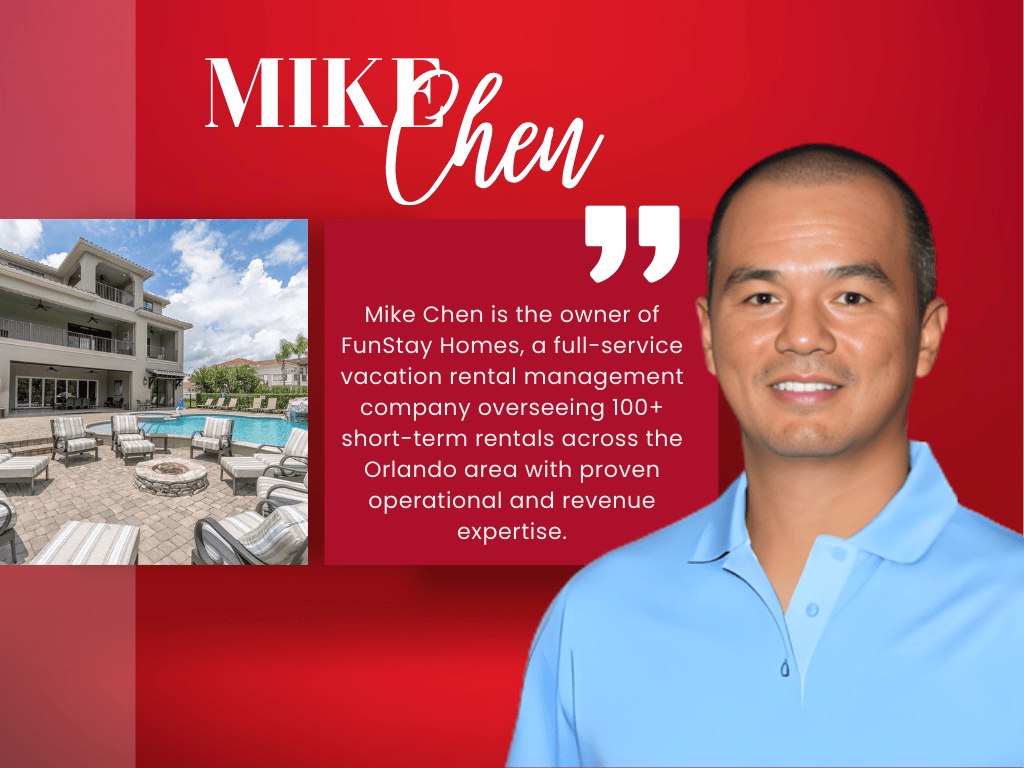
If you want to avoid costly mistakes and invest with clarity, work with Mike Chen, Orlando’s leading STR Realtor. He combines real performance data, local zoning expertise, and hands-on STR ownership to help you buy right the first time.


 EN
EN
 ZH
ZH