Orlando is the theme park capital of the world, welcoming over 75 million visitors annually. For real estate investors, those numbers look like a gold mine. And they can be.
But there is a massive gap between seeing potential revenue on a spreadsheet and actually banking profit. The Orlando short-term rental market is complex, competitive, and legally layered. Many new investors, especially those buying from out of state, dive in without understanding the specific operational and regulatory hurdles that can turn a dream asset into a financial nightmare.
Is Airbnb profitable in Orlando? Absolutely. But only if you navigate the minefield of zoning laws, HOA restrictions, and operational costs first.
Here is the unvarnished truth about the biggest Airbnb investment risks in Orlando and, more importantly, how to mitigate them to build a thriving portfolio.
1. The Zoning Trap: Buying Where It’s Illegal
The single biggest mistake new investors make is assuming they can buy any nice house in Orlando and list it on Airbnb. This is false, and it is a costly error.
Are short-term rentals legal in Orlando, Florida?
Yes, but with strict caveats. The City of Orlando has specific zoning ordinances that distinguish between “home-sharing” (where you live on-site) and “whole-home rentals” (investment properties).
- Residential Zones: Generally prohibit whole-home rentals under 30 days.
- Short-Term Rental Zones: Specific areas (often in unincorporated Orange or Osceola counties, like Kissimmee and Davenport) where vacation rentals are permitted by right.
The Risk: You buy a beautiful single-family home in a residential neighborhood, spend $30k on furniture, and list it. Two weeks later, code enforcement slaps you with a violation, fines of $250+ per day, and a cease-and-desist order.
The Fix: Always verify Airbnb zoning laws in Orlando before you make an offer. Focus your search on purpose-built resort communities or areas explicitly zoned for short-term rentals.
2. The HOA Surprise: Restrictions That Kill Cash Flow
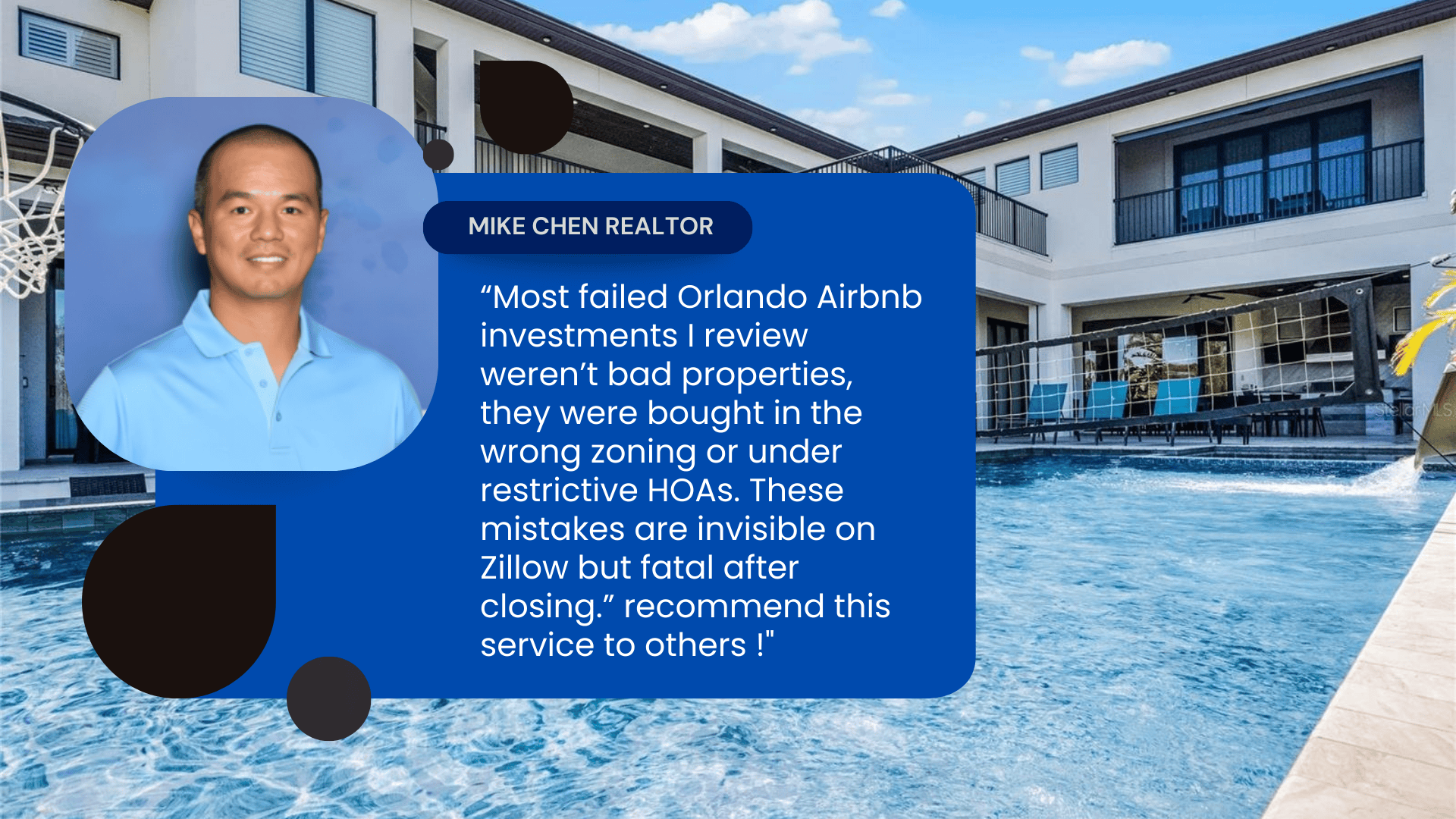
Even if the city zoning allows STRs, the Homeowners Association (HOA) might not. In Florida, HOAs have immense power. They can restrict lease lengths, ban rentals entirely, or impose application fees that make short stays impossible.
Common HOA Risks:
- Minimum Lease Terms: An HOA might require a 7-month or 12-month minimum lease, instantly killing your nightly rental strategy.
- Gate Access Issues: Strict security protocols can make guest check-ins a logistical nightmare.
- Surprise Assessments: Older condos may hit owners with $10k+ special assessments for roof repairs or structural issues.
The Fix: During your due diligence period, request and read the current HOA governing documents. Look specifically for “leasing restrictions” and “rental amendments.”
3. Oversaturation vs. Differentiation
Is Orlando oversaturated with Airbnbs in 2026?
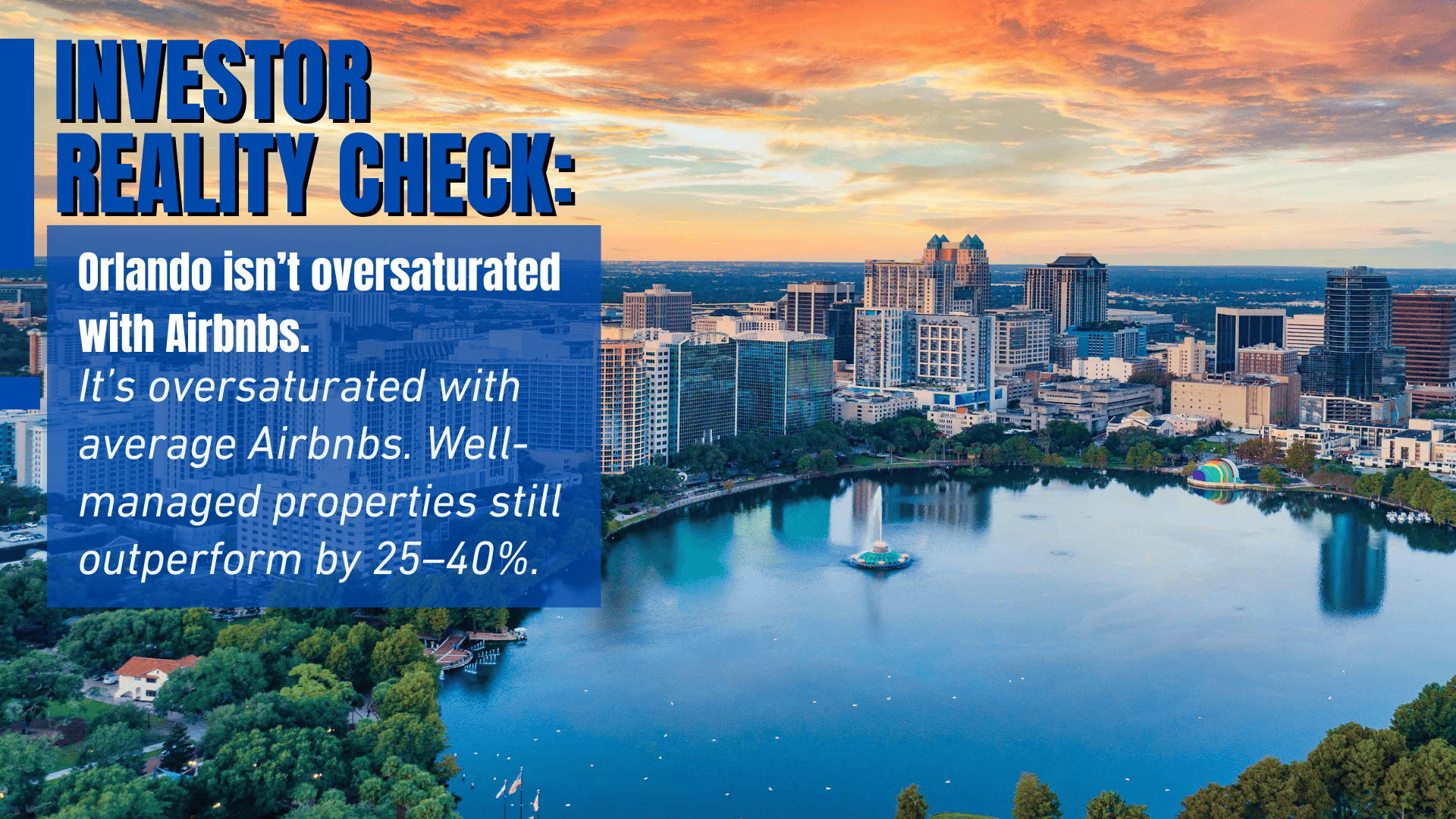
If you look at the raw number of listings, it might seem crowded. However, the market is flooded with mediocre inventory dated furniture, dark photos, and basic amenities.
The Risk: Buying a generic property and expecting high occupancy. If your property looks like everyone else’s, you will be forced to compete on price, driving your margins into the ground.
The Fix: You must differentiate. In Orlando, this means themed rooms (Disney, Harry Potter, Star Wars), game rooms, private pools, and high-end design.
4. Underestimating Operational Costs
Many online calculators show gross revenue but hide the true cost of doing business. Orlando vacation rental costs are higher than long-term rentals because you are running a hospitality business, not just being a landlord.
Hidden Costs Breakdown:
| Expense Category | Estimated Monthly Cost | Notes |
| Utilities | $300 – $600+ | AC runs hard in Florida summers; heated pools cost extra. |
| Pool Care | $100 – $150 | Weekly cleaning is mandatory. |
| Lawn/Pest | $100 – $150 | Florida bugs are relentless without treatment. |
| Management | 15% – 25% | Commission fees for full-service management. |
| HOA Fees | $200 – $600+ | Often covers internet/cable in resort communities. |
The Risk: Focusing on STR cash flow Orlando projections without factoring in high electric bills in July or the cost of replacing linens and towels every few months.
The Fix: Run your numbers conservatively. Assume 65% occupancy, not 90%. Budget for heavy wear and tear.
5. Seasonality and Revenue Volatility
New investors often ask: Can you lose money on an Airbnb in Orlando?
Yes, if you don’t plan for September.
Orlando has distinct high and low seasons.
- Peak Season: Spring Break (March/April), Summer (June/July), Holidays (December).
- Shoulder/Low Season: May, September, and parts of October/January.
The Risk: You buy in March when revenue is skyrocketing, assuming that income will continue year-round. Then September hits, occupancy drops to 40%, and you have to cover the mortgage out of pocket.
The Fix: Maintain a cash reserve of 3-6 months of expenses. Do not rely on cash flow from one month to pay the next month’s bills. Use dynamic pricing tools to lower rates during slow months to keep occupancy steady.
6. Regulatory Changes and Taxes
Do Airbnb regulations affect profitability in Orlando?
Directly. Beyond zoning, you must comply with tax laws. You are responsible for collecting and remitting taxes to the county and state.
- Tourist Development Tax (6%): Payable to Orange or Osceola County.
- Sales Tax (6%): Payable to the Florida Dept. of Revenue.
While platforms like Airbnb collect and remit some of these, there are often gaps, especially if you take direct bookings. Failing to pay these can lead to audits and liens.
Common Investor Questions
What are the biggest Airbnb investment risks in Orlando?
Zoning violations (buying in the wrong area) and restrictive HOAs are the top risks that can completely shut down your business.
What are common mistakes new Airbnb investors make in Orlando?
Underestimating the cost of utilities (especially pool heating and AC) and failing to theme the property to stand out from competitors.
How much does it cost to run an Airbnb in Orlando?
Depending on the size of the home, operational costs (utilities, HOA, maintenance, cleaning supplies) can range from $1,500 to $3,000+ per month before mortgage payments.
How Mike Chen Helps Investors Succeed
Mike Chen is an Orlando short-term rental expert, Realtor®, and active operator whose approach goes far beyond traditional property sales. As the co-founder of FunStay Homes, Mike directly manages over 100 high-performing Airbnb and vacation properties in Orlando, Kissimmee, Davenport, and prime resort communities near Disney.
What sets Mike apart is hands-on, data-driven guidance throughout your entire investment journey, not just at closing. He helps investors identify properties in the right zones, thoroughly review HOA rules, and build realistic projections based on local occupancy, ADR, and cost trends, not guesses or outdated comps. His operational experience means he can spot pitfalls most agents miss, from regulatory headaches to high-turnover cleaning logistics.
Mike Chen is not just your agent—he’s your local STR partner. Mike’s operational insight and commitment to investor success have built his reputation as the go-to resource for out-of-state buyers and first-time Airbnb investors aiming for sustainable results in the Orlando short-term rental market.
Is Orlando Short-Term Rental Investment Right for You?
Investing in the Orlando short-term rental market can be one of the best financial decisions you make, provided you respect the risks involved. The investors who fail are usually the ones who treat it like a passive hobby rather than an active business.
The investors who succeed? They buy in the right zones, verify HOA rules, budget for seasonality, and create a guest experience that commands 5-star reviews.

 EN
EN
 ZH
ZH