Short-term rentals (STRs) attract thousands of new investors every year. Social media stories, YouTube case studies, and online forums often highlight easy money, flexible schedules, and steady cash flow. Many buyers enter believing they have found a true passive income stream, without fully understanding why Airbnb investors fail in competitive markets.
Reality often looks different. A large share of Airbnb investors struggle or quietly exit within a few years, and the reason is not always location, timing, or financing. The biggest factor is mindset, since STRs operate more like hospitality businesses than passive investments. That gap between expectations and reality leads to the common and costly mistakes behind why Airbnb investors fail.
The Airbnb Passive Income Myth
The Airbnb passive income myth is one of the main drivers of disappointment. The idea sounds appealing: buy a property, list it, automate a few messages, and collect monthly payouts. Compared to long-term rentals, STRs can generate higher gross revenue, which makes the model even more attractive.
However, higher revenue potential comes with higher operational demands. Unlike a traditional rental where a tenant may stay for a year, STRs involve constant guest turnover. Each booking creates a new cycle of communication, cleaning, inspection, and problem-solving.
Airbnb is not just a platform for renting space. It is a marketplace where guest experience, responsiveness, and consistency directly affect visibility and earnings. Treating it as a passive asset often results in declining performance.
STRs Are Hospitality Businesses, Not Just Properties
A successful STR follows a hospitality business model. Guests compare listings like they compare hotels. They look at photos, reviews, response time, amenities, and cleanliness. A single bad stay can lead to a negative review that affects future bookings.
Owners who view their property as “just real estate” often overlook these details. They may delay maintenance, use low-quality cleaners, or respond slowly to messages. Over time, ratings drop, search rankings decline, and occupancy suffers.
In competitive markets like Orlando, where thousands of listings compete for the same travelers, small quality gaps become big revenue gaps. Guests have many options and little patience for subpar experiences.
Common Airbnb Investment Mistakes
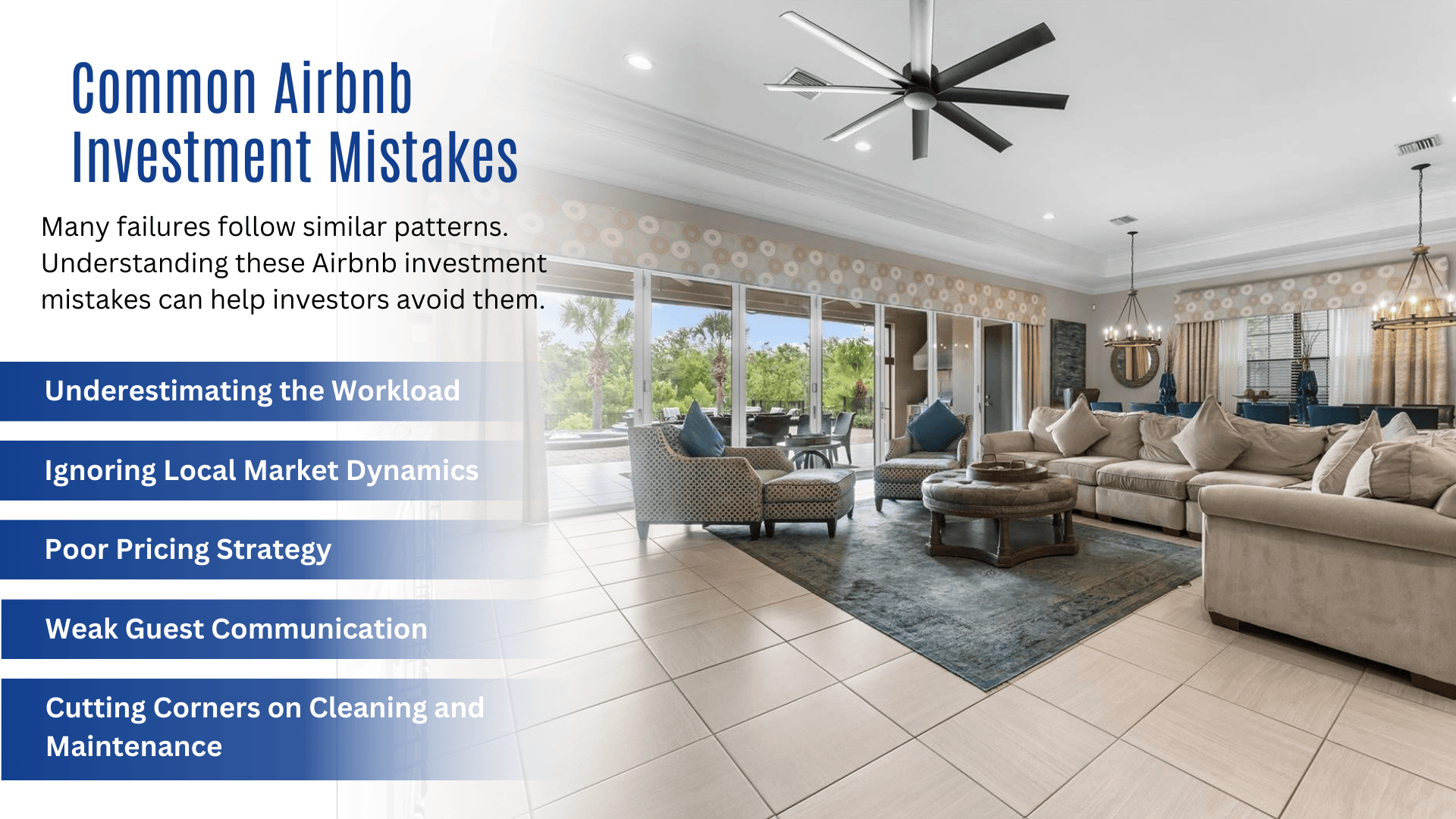
1. Underestimating the Workload
Managing bookings, coordinating cleaners, restocking supplies, handling guest questions, and resolving issues takes time. Even with automation tools, someone must oversee operations. Investors who expect a “set it and forget it” system quickly feel overwhelmed.
2. Ignoring Local Market Dynamics
Every STR market behaves differently. Seasonality, local regulations, events, and tourism patterns all affect demand. Investors who rely only on national averages may overestimate income and underestimate risk.
3. Poor Pricing Strategy
Static pricing leaves money on the table or reduces occupancy. Dynamic pricing requires monitoring demand, events, and competitor rates. Owners who rarely adjust pricing often underperform.
4. Weak Guest Communication
Slow or unclear communication hurts rankings and reviews. Guests expect quick responses before and during their stay. Missed messages can mean lost bookings or unhappy guests.
5. Cutting Corners on Cleaning and Maintenance
Cleanliness is one of the top review drivers. Skipping deep cleans, delaying repairs, or using inconsistent cleaners damages reputation fast. Recovering from multiple low reviews can take months.
The Real STR Management Challenges
STR management challenges go beyond messaging and cleaning. Owners must handle:
- Calendar coordination across platforms
- Damage claims and security deposits
- Permit and compliance requirements
- Neighbor relations and noise issues
- Supply inventory and restocking
- Emergency repairs at odd hours
These tasks do not stop on weekends or holidays. In fact, problems often appear at the most inconvenient times. A late-night lockout or a broken AC in summer can turn into a crisis if not handled quickly.
Investors who hold full-time jobs or live far from their property often struggle to keep up. This leads to stress, burnout, and inconsistent service.
Airbnb Self-Managing Risks
Self-managing can work for some owners, but it carries real Airbnb self-managing risks. Time constraints are only one factor. Emotional fatigue also plays a role. Constant notifications, guest requests, and problem-solving can become draining.
Another risk is inconsistency. If the owner travels, gets busy, or loses motivation, service quality may slip. STR performance relies on consistency. One weak month can affect algorithm placement and future demand.
There is also a knowledge gap. Experienced operators like Mike Chen understand listing optimization, pricing strategy, and review management. New investors often learn through trial and error, which can be costly.
Why Short-Term Rentals Underperform
Many owners wonder why short-term rentals underperform even in good locations. Often, the issue is operational, not structural.
Underperformance usually connects to:
- Low-quality photos or outdated listings
- Slow response times
- Inconsistent cleaning standards
- Poor amenity selection
- Weak pricing strategies
- Limited local market knowledge
The Hidden Cost of Burnout
Burnout rarely appears in financial spreadsheets, but it affects returns. Owners who feel exhausted may lower standards, delay responses, or stop optimizing their listings. That slow decline reduces revenue over time.
Some investors eventually sell their STRs or convert them to long-term rentals. Not because the market failed, but because the operational load became too heavy. This outcome reinforces why Airbnb investors fail when they expect passive results from an active business.
How Successful Airbnb Investors Operate
Profitable STR investors treat their properties like businesses. They rely on active Airbnb management, not wishful thinking.
Key practices include:
Systems and Standard Operating Procedures
Clear processes for cleaning, inspections, guest communication, and maintenance create consistent service. Checklists reduce mistakes and help maintain quality standards.
Data-Driven Pricing
Dynamic pricing tools adjust rates based on demand, seasonality, and local data. This helps maximize revenue while keeping occupancy competitive.
Professional Photography and Listing Optimization
High-quality photos attract more clicks from potential guests. Clear, well-written descriptions improve booking conversion.
Reliable Vendor Networks
Trusted cleaners and service providers keep turnovers and repairs on schedule. Reliable support reduces downtime and protects reviews.
Continuous Improvement
Top operators review feedback and performance regularly. They upgrade amenities and refine the guest experience to stay competitive.
The Role of Professional Management
Many investors eventually ask whether professional help is worth it. In competitive markets, professional managers often improve performance through expertise and local knowledge.
A good manager handles daily vacation rental operations, monitors pricing, coordinates vendors, and ensures consistent guest experiences. While management fees reduce gross margins, they can increase net returns by improving occupancy, ratings, and efficiency.
For remote investors or those with limited time, management can turn a struggling listing into a stable asset.
Setting Realistic Expectations
STRs can be profitable, but they are rarely passive. Viewing them as active businesses leads to better planning and decision-making.
Realistic owners budget for:
- Ongoing maintenance
- Professional cleaning
- Technology tools
- Furnishing upgrades
- Emergency reserves
They also plan their time commitment or hire help. This mindset shift helps avoid the traps behind the Airbnb passive income myth.
What Successful Orlando Airbnb Investors Do Differently
The Orlando investors who last don’t chase “passive income.” They build systems or partner with people who already have them. They recognize early that short-term rentals reward preparation, consistency, and operational discipline.
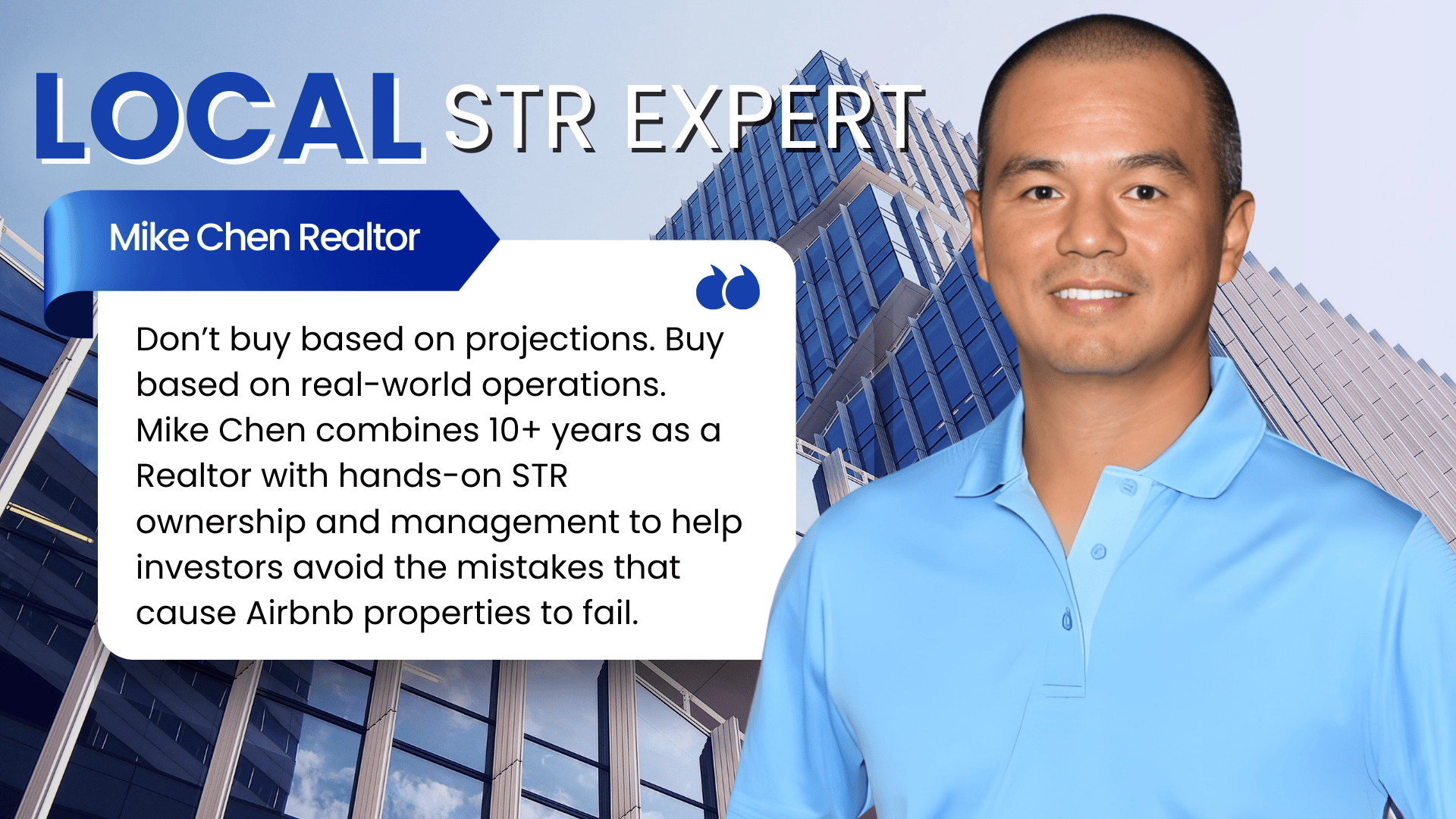
That’s where Mike Chen stands apart.
Mike isn’t just a Realtor selling STR-friendly homes. He’s a local short-term rental operator, Airbnb Superhost, and co-founder of FunStay Florida, a full-service vacation rental management company handling 100+ active properties across the Orlando area. He also owns and operates vacation rentals himself, giving him firsthand operational insight.
After more than 10 years as a Realtor and STR investor, Mike sees the same pattern repeatedly: investors struggle when buying decisions are disconnected from real-world operations. Many focus on purchase price or projected revenue but overlook zoning rules, HOA restrictions, or guest demand trends.
Successful investors do the opposite. They:
- Buy based on actual performance data, not projections
- Understand zoning, HOAs, and guest demand before closing
- Optimize for operations, reviews, and rankings, not just price
- Treat STRs as a hospitality business, not a side hustle
Since Mike both sells and operates short-term rentals daily, he helps investors avoid the most common failure points before they happen. That insider perspective, combining ownership, management, and brokerage experience, often separates long-term winners from early exits in the Orlando STR market.
Ready to Invest Smarter in Orlando STRs?
If you want to avoid the common traps behind why Airbnb investors fail, the smartest move is learning from operators who work in the market every day. If you are buying your first short-term rental, scaling a portfolio, or improving an underperforming property, guidance grounded in real operations makes a measurable difference.
Talk to a local STR expert like Mike Chen before your next purchase, because the right strategy at the start can save years of trial and error and help protect your investment from becoming another statistic.
Frequently Asked Questions (FAQs)
Is Airbnb really passive income?
Airbnb is rarely fully passive. Even with automation, STRs require oversight, guest communication, and quality control. Most successful listings involve active management or professional support.
Why do Airbnb investors lose money?
Investors often lose money due to poor pricing, weak occupancy, bad reviews, and underestimated expenses. Treating STRs like passive assets instead of businesses is a common cause.
Can you self-manage an Airbnb successfully?
Yes, self-managing can work if you have time, systems, and local support. Success depends on consistency, responsiveness, and operational knowledge.
How much work is managing an Airbnb?
Managing an Airbnb can feel like a part-time job. Tasks include messaging, coordinating cleaning, restocking, handling issues, and monitoring pricing.
What causes Airbnb investments to fail?
Failures often come from poor management, unrealistic expectations, and lack of market knowledge. Low service quality and weak reviews also hurt performance.
Do you need a property manager for Airbnb?
Not always, but many owners benefit from one. Managers help with operations, pricing, and guest experience, especially in competitive markets.
Why do short-term rentals underperform?
Underperformance usually links to low ratings, poor photos, slow communication, or weak pricing strategies. Operational quality strongly affects results.



 EN
EN
 ZH
ZH